
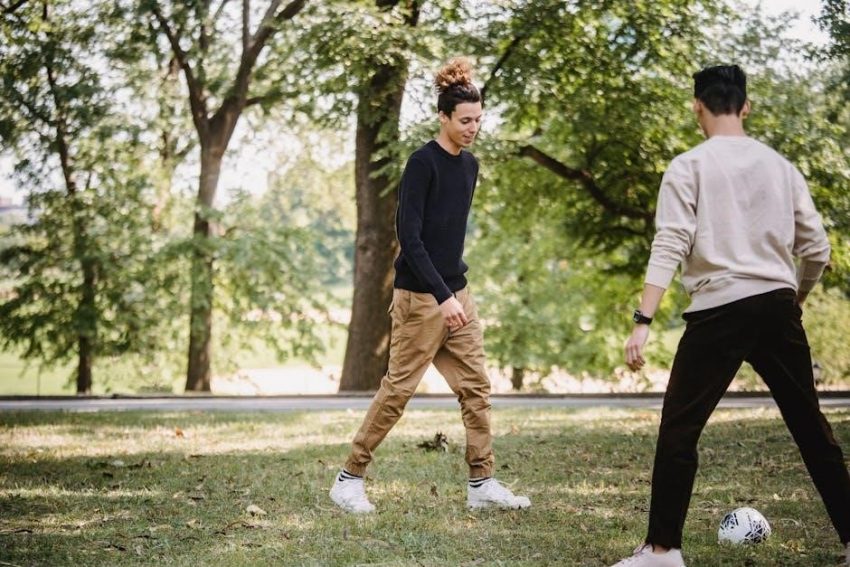
U12 Soccer Practice Plans PDF: A Comprehensive Guide
Discover expertly crafted PDF resources designed to elevate your U12 soccer training, focusing on skill development, tactical awareness, and engaging practice sessions.
Access plans that blend fun drills – dribbling, passing, shooting – with small-sided games, fostering a positive learning environment for young athletes.
Understanding the U12 Age Group
At the U12 level, players are transitioning from fundamental skill acquisition to applying those skills within tactical frameworks. This is a crucial developmental stage where cognitive understanding of the game significantly increases. Players begin grasping concepts like positioning, spacing, and basic team formations.
Practices should prioritize fostering a love for the game while building a solid technical foundation. Emphasis should be placed on individual skill refinement – dribbling with speed and control, accurate passing, and developing shooting technique. However, it’s equally important to introduce small-sided games that encourage decision-making and tactical awareness. U12 players are capable of understanding and implementing simple game strategies.
Coaches must create a positive and encouraging environment, focusing on effort and improvement rather than solely on results. Remember, this age group thrives on fun and engagement, so incorporating enjoyable activities is key to maximizing learning and development.
Key Skill Development Focus for U12 Players
U12 players benefit from focused training on core soccer skills. Dribbling should progress beyond basic ball control to include changes of pace, feints, and shielding the ball from defenders. Passing accuracy and weight of pass are paramount, incorporating both short, quick combinations and longer distribution. Shooting drills should emphasize proper technique, power generation, and placement, not just hitting the ball hard.
Tactically, players should begin to understand positional play, supporting runs, and creating passing lanes. Defensively, focus on individual defending skills – tackling, intercepting passes, and closing down space. Importantly, all drills should be game-realistic, simulating scenarios players will encounter during matches.
Skill development isn’t isolated; it’s integrated into small-sided games, allowing players to apply learned techniques in a dynamic, decision-making environment. Fun, engaging drills are crucial for maintaining motivation and fostering a love for the game.
Essential Components of a U12 Soccer Practice
A well-structured U12 soccer practice must incorporate several key elements for optimal development. Firstly, a dynamic warm-up prepares players physically and mentally, preventing injuries and enhancing performance. Secondly, skill-based drills focusing on dribbling, passing, and shooting build technical proficiency. Thirdly, small-sided games – 3v3 or 4v4 – promote tactical understanding and decision-making in game-like situations.
Crucially, a cool-down and static stretching routine aids recovery and flexibility. Furthermore, practices should be progressive, gradually increasing difficulty as players improve. Positive reinforcement and constructive feedback are vital for building confidence and motivation. Finally, a clear practice plan with defined objectives ensures a focused and productive session.
Remember, the best practices are fun, engaging, and tailored to the players’ skill levels, fostering a love for the game.
Warm-up Activities (15-20 Minutes)
Begin each U12 soccer practice with a dedicated 15-20 minute warm-up to prepare players physically and mentally. Start with light jogging to increase blood flow and raise core temperature. Follow this with dynamic stretching, focusing on movements like leg swings, arm circles, and torso twists – crucial for injury prevention.
Next, incorporate ball familiarization exercises. Simple activities like dribbling in a designated area, passing in pairs, or juggling help players connect with the ball. Ensure these exercises are performed at a moderate intensity, gradually increasing as the warm-up progresses. The goal is to activate muscles and improve coordination before more strenuous drills.
Remember to keep it engaging and fun, setting a positive tone for the session!
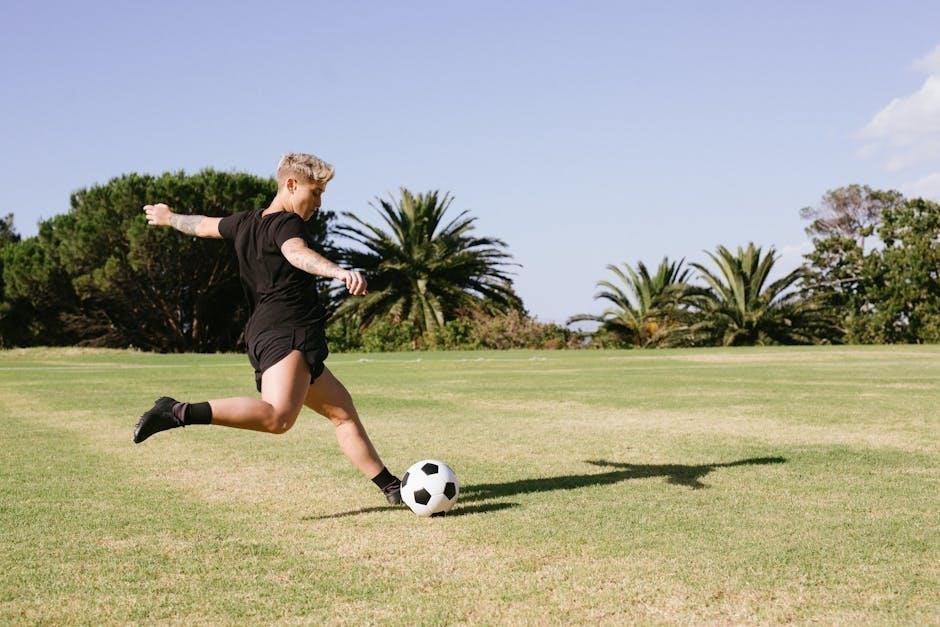
Dynamic Stretching for Injury Prevention

Prioritize injury prevention with a focused dynamic stretching routine. Unlike static stretching, dynamic stretches involve controlled movements that prepare muscles for activity. Include exercises like leg swings (forward, backward, and sideways), arm circles (forward and backward), torso twists, and high knees.
Emphasize controlled execution and a full range of motion. Encourage players to feel a gentle stretch, avoiding any bouncing or jerky movements. Focus on major muscle groups used in soccer – hamstrings, quads, groin, calves, and shoulders. This prepares the body for the demands of practice, reducing the risk of strains and sprains.
Allocate approximately 5-7 minutes to dynamic stretching, ensuring all players understand proper technique.
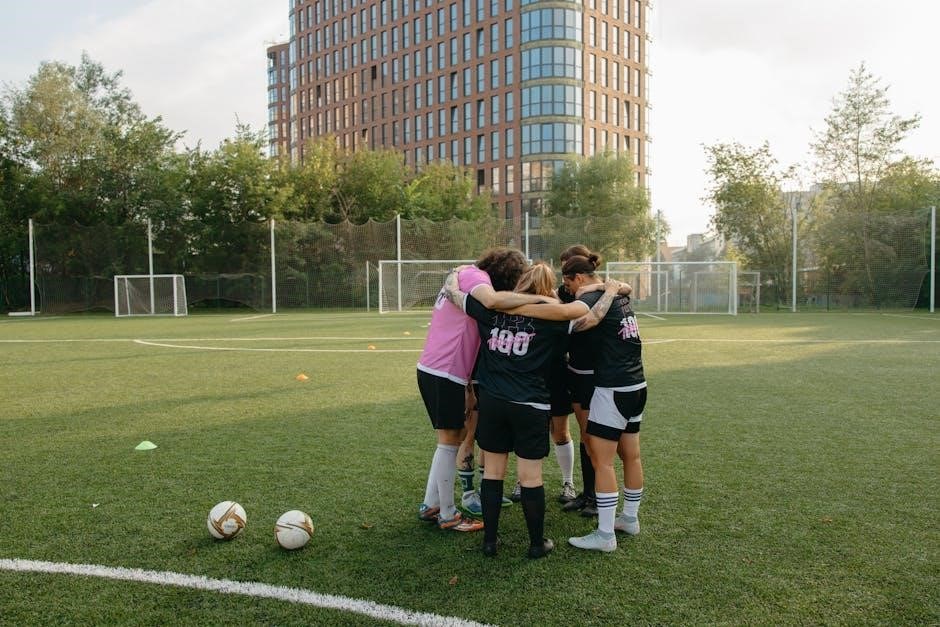
Light Jogging and Ball Familiarization
Begin the practice with 5-10 minutes of light jogging to elevate heart rates and increase blood flow to the muscles. Combine this with individual ball familiarization exercises. Have players gently jog with a soccer ball, using different parts of their feet – inside, outside, laces – to maintain control.
Encourage simple dribbling patterns within a defined space, focusing on close ball control and awareness. Introduce variations like toe taps, sole rolls, and pullbacks. This helps players regain touch and confidence with the ball after any time away from practice.
Emphasize relaxed movements and a comfortable pace, avoiding any competitive pressure at this stage.
Skill-Based Drills (30-40 Minutes)
Dedicate this segment to focused skill development, building upon the warm-up. Implement a series of drills targeting dribbling, passing, and shooting – essential components for U12 players. Cone weaving exercises enhance agility and close control, while speed control drills improve ball manipulation at pace.
Short passing drills emphasize accuracy and quick decision-making, progressing to longer passing for distribution skills. Shooting drills should focus on proper technique, power generation, and placement. Ensure drills are age-appropriate and progressively challenging.
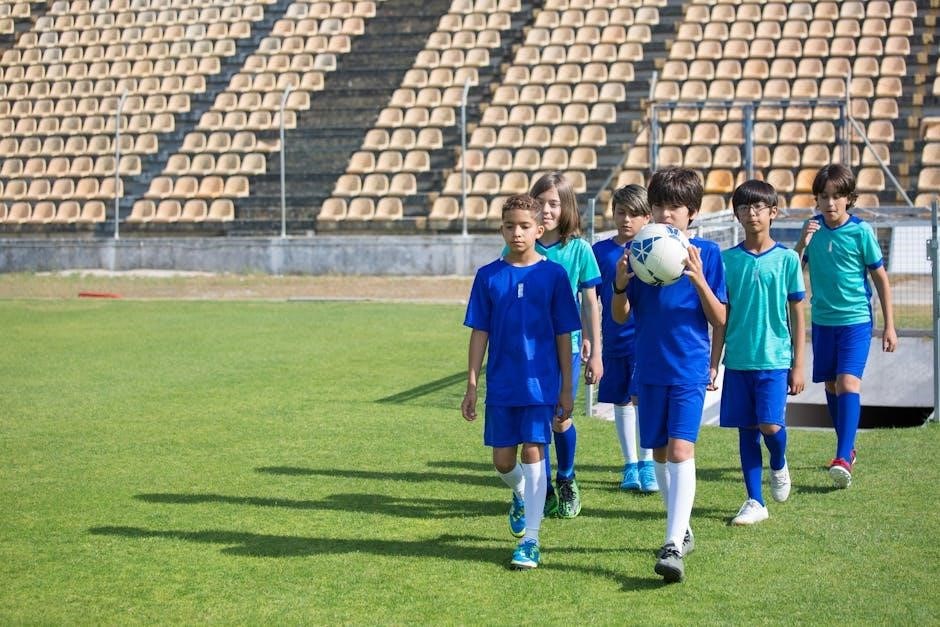
Maintain a high activity level, minimizing downtime and maximizing touches on the ball for each player.
Dribbling Drills: Cone Weaving and Speed Control
Cone weaving drills are fundamental for developing agility, close ball control, and change of direction. Set up a line of cones, spaced appropriately for the players’ skill level, and have them dribble through, focusing on tight touches and maintaining speed. Introduce variations like using different surfaces of the foot.
Speed control drills challenge players to dribble at increasing speeds while maintaining composure and control. Incorporate challenges like dribbling within a defined space or towards a target. Emphasize the importance of keeping the head up to scan the field.
Progress from slow, controlled dribbling to faster, more dynamic movements.
Passing Drills: Short Passing and Long Passing Accuracy
Short passing drills focus on technique, accuracy, and quick decision-making. Players should practice passing with the inside of the foot, emphasizing a firm ankle and follow-through. Implement partner passing exercises, gradually decreasing the distance between players. Encourage communication and receiving on the move.
Long passing accuracy drills develop the ability to distribute the ball over greater distances. Focus on proper technique – a planted foot, swinging leg, and striking the ball with the laces. Introduce target practice, aiming for specific zones or teammates.
Progress to passing under pressure, simulating game-like scenarios.
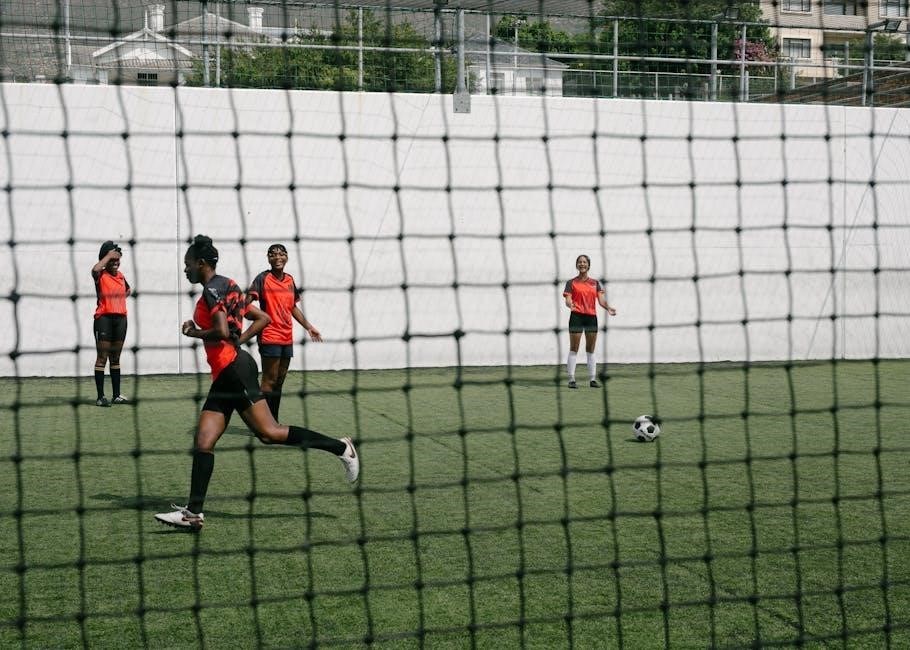
Shooting Drills: Technique and Power Development
Shooting drills at the U12 level prioritize proper technique over sheer power. Begin with stationary shooting, focusing on foot placement, ankle lock, and striking the center of the ball. Emphasize a follow-through towards the target. Introduce different shooting surfaces – inside foot for placement, laces for power.
Progress to shooting on the move, incorporating dribbling and quick changes of direction. Set up target zones to encourage accuracy. Implement drills that simulate game situations, such as shooting after a pass or a run.
Encourage players to keep their head over the ball and maintain balance.
Small-Sided Games (20-30 Minutes)
Small-sided games are crucial for U12 development, fostering tactical understanding and decision-making skills. Focus on 3v3 and 4v4 scrimmages, limiting the field size to encourage frequent touches and involvement. Emphasize quick passing, movement off the ball, and defensive positioning.
Introduce game-specific scenarios, like attacking against a compact defense or defending a counter-attack. Rotate players frequently to ensure everyone experiences different roles. Encourage communication and teamwork.

These games provide a fun, competitive environment where players can apply the skills learned in drills. Observe and provide targeted feedback during breaks.
3v3 and 4v4 Scrimmages for Tactical Awareness
Utilize 3v3 and 4v4 scrimmages to build tactical intelligence in U12 players. These smaller games demand constant movement, quick decision-making, and effective communication. Limit field size to maximize touches and involvement, forcing players to think creatively under pressure.
Focus coaching points on supporting runs, creating passing lanes, and recognizing space. Encourage players to scan the field before receiving the ball. Emphasize defensive principles like pressing and tracking runners.
Rotate teams frequently to expose players to different tactical challenges. Observe how players apply skills learned in drills within a game context.
Game-Specific Scenarios: Attacking and Defending
Introduce realistic game scenarios to enhance tactical understanding. Simulate situations like defending a lead, equalizing, or breaking down a stubborn defense. For attacking scenarios, practice quick passing combinations, overlapping runs, and finishing under pressure. Emphasize the importance of movement off the ball and creating space.
Defensive scenarios should focus on organized pressing, tracking runners, and winning 50/50 challenges. Implement drills that require quick transitions from attack to defense. Encourage communication and teamwork during these scenarios.
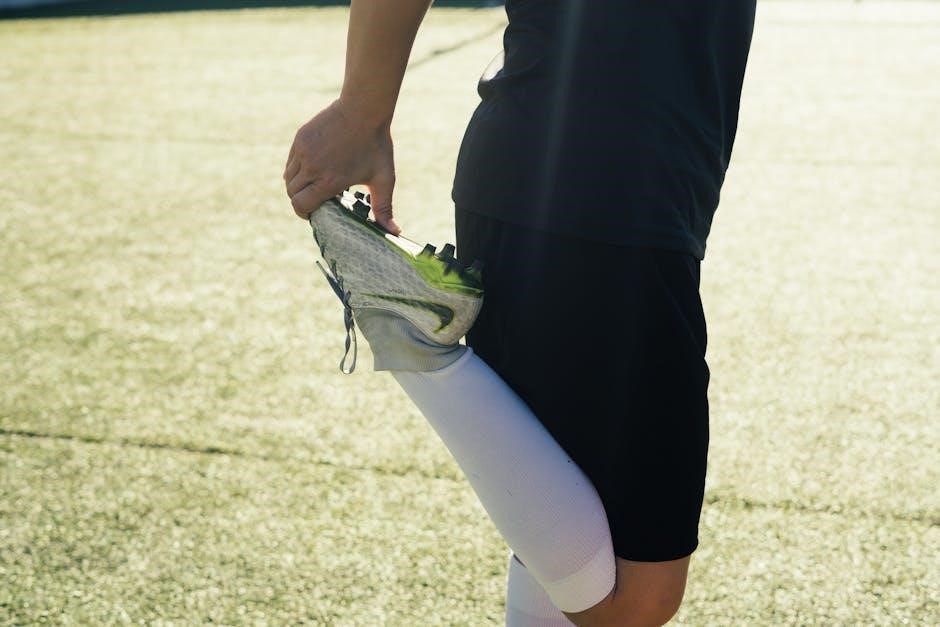
Adjust the complexity of scenarios based on player skill levels. Observe decision-making and problem-solving abilities in game-like conditions.
Cool-down and Stretching (10-15 Minutes)
Prioritize a proper cool-down to aid recovery and prevent muscle soreness. Begin with a light jog or walk around the field to gradually lower heart rate. Follow this with static stretching, holding each stretch for 20-30 seconds. Focus on major muscle groups used during practice – hamstrings, quads, calves, and groin.
Encourage deep breathing exercises to promote relaxation. Emphasize the importance of stretching without bouncing, maintaining a controlled and comfortable range of motion. This phase is crucial for reducing muscle stiffness and improving flexibility.
Consider incorporating foam rolling for self-massage and deeper muscle recovery.
Practice Plan Structure: A Sample 60-Minute Session
A typical 60-minute U12 practice should be thoughtfully structured. Begin with a 15-20 minute warm-up, including dynamic stretching and light ball work to prepare muscles. Dedicate 30-40 minutes to skill-based drills – dribbling, passing, and shooting – focusing on technique and repetition.
Allocate 20-30 minutes for small-sided games (3v3 or 4v4) to apply skills in a game-like setting, promoting tactical awareness. Conclude with a 10-15 minute cool-down and static stretching routine. Remember to keep drills engaging and age-appropriate.
Adapt the timing based on player needs and focus areas. Prioritize fun and positive reinforcement throughout the session.
Utilizing PDF Practice Plans: Benefits and Resources
PDF practice plans offer coaches a convenient and organized way to deliver effective U12 soccer training. Benefits include readily available, printable sessions, ensuring consistency and easy reference during practice. Resources abound online, offering free and premium plans tailored to various skill levels.
These plans often detail drill setups, coaching points, and session timings, streamlining preparation. Utilizing them saves time and reduces stress, allowing coaches to focus on player development. Explore websites dedicated to youth soccer coaching for a wealth of downloadable PDFs.
Remember to customize plans to suit your team’s specific needs and abilities.
Finding Free U12 Soccer Practice Plans PDF Online
Numerous websites offer free U12 soccer practice plans in PDF format, providing coaches with accessible resources. Search online using keywords like “U12 soccer drills PDF” or “youth soccer practice plans free.” Websites dedicated to soccer coaching, such as those focused on youth development, are excellent starting points.
YouTube channels and associated resources often link to downloadable plans. Progressive Soccer, for example, provides drills and potentially linked plans. Be mindful of the source’s credibility and ensure the plans align with your coaching philosophy.
Always review the plans before implementation, adapting them to your team’s skill level and needs.
Customizing Practice Plans to Player Skill Levels
Effective U12 soccer practice plans aren’t one-size-fits-all; adaptation is key. Assess your players’ abilities – dribbling speed, passing accuracy, shooting power – to tailor drills accordingly. For less experienced players, simplify drills, focusing on fundamental technique with larger spaces and slower paces.
More advanced players benefit from increased complexity, smaller spaces, and faster repetitions. Modify passing drills by introducing movement or requiring one-touch passing. Adjust shooting drills to emphasize placement over power, or vice versa, based on individual needs.
Remember, progressive overload is crucial – gradually increase difficulty as skills improve.
Incorporating Fun and Engaging Activities
U12 players thrive in environments that prioritize enjoyment alongside skill development. Transform drills into games – cone weaving becomes a race, passing drills evolve into target practice. Introduce themed practices, like “attack vs. defense island,” to spark imagination and competition.
Utilize colorful equipment and create a positive atmosphere with encouragement and praise. Small-sided games (3v3, 4v4) are inherently fun and promote tactical thinking. Incorporate challenges with small rewards, fostering motivation and a sense of accomplishment.
Remember, a happy player is a learning player; keep practices energetic and engaging!
The Importance of Positive Reinforcement and Coaching
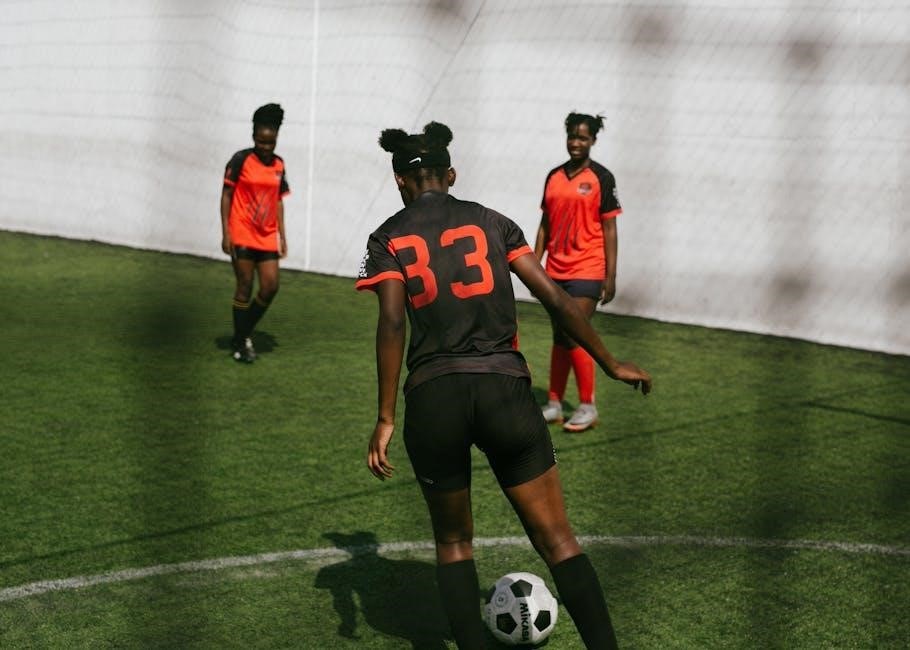
Effective U12 coaching centers on building confidence and fostering a love for the game. Focus on effort and improvement, not solely on results. Positive reinforcement – specific praise for skills demonstrated – is far more impactful than criticism. Create a safe space where players aren’t afraid to make mistakes, viewing them as learning opportunities.
Encourage teamwork and sportsmanship, emphasizing respect for teammates and opponents. Lead by example, demonstrating enthusiasm and a positive attitude. Remember, at this age, developing a passion for soccer is paramount; nurturing that passion requires patience and encouragement.
A supportive coach builds not just players, but confident individuals.
Progressive Overload: Gradually Increasing Difficulty
Effective U12 soccer development hinges on progressive overload – systematically increasing the challenge to stimulate improvement. Begin with fundamental drills, mastering basic techniques before introducing complexity. Gradually reduce the size of the playing area, increasing the density of players and demanding quicker decision-making.
Introduce new skills incrementally, building upon previously learned concepts. Increase the speed or intensity of drills, challenging players’ physical and mental endurance. Modify game scenarios, adding constraints or objectives to promote tactical understanding. Monitor player fatigue and adjust accordingly, preventing overtraining and injury.
Consistent, measured progression is key to sustained growth.
Common Mistakes to Avoid in U12 Soccer Training
Avoid overly complex drills that overwhelm young players; focus on foundational skills. Resist the urge to constantly interrupt – allow for creative problem-solving and independent learning. Don’t prioritize winning over development; emphasize effort, sportsmanship, and skill acquisition. Refrain from lengthy explanations; demonstrate, then let players experience.
Steer clear of neglecting individual needs; differentiate instruction to cater to varying skill levels. Don’t fall into the trap of repetitive drills without variation; maintain engagement with fun, dynamic activities. Avoid excessive criticism; prioritize positive reinforcement and constructive feedback. Remember, fun is paramount – a positive environment fosters a love for the game!
Resources for U12 Soccer Coaches and Players
Explore Progressive Soccer’s YouTube channel for effective passing drills tailored for U12, U10, U8, and U6 players – a fantastic visual learning tool! Discover downloadable soccer drills and resources to enhance training sessions, focusing on skill development. Utilize online platforms offering free U12 soccer practice plans in PDF format, providing diverse session ideas.
Consider Netflix for inspiration on teamwork and dedication, though indirectly related, it showcases commitment. Access coaching websites and forums for expert advice, shared practice plans, and community support. Remember to prioritize player safety and well-being, seeking guidance from qualified professionals when needed. Embrace continuous learning to stay updated on best practices in youth soccer coaching!