

Clarissa Pinkola Estés’s groundbreaking work explores the female psyche, often sought in “PDF” format for accessibility, offering insights into instinct and reclaiming wildness.
Overview of Clarissa Pinkola Estés and the Book
Clarissa Pinkola Estés, a Jungian psychoanalyst and post-trauma specialist, masterfully blends psychology, mythology, and folklore in Woman Who Runs with the Wolves. Published in 1992, the book quickly became a cornerstone of feminist thought and self-help literature. Many seek a “PDF” version for convenient study and access to its profound wisdom.
Estés’s work delves into the archetypal “Wild Woman,” a primal feminine force often suppressed by societal norms. The book analyzes folktales and myths from diverse cultures, revealing universal patterns in the female experience. Its enduring popularity stems from its ability to resonate with women seeking to reconnect with their intuition, creativity, and authentic selves. Finding a legitimate PDF copy allows wider dissemination of these powerful ideas.
The Core Concept: Wild Woman Archetype
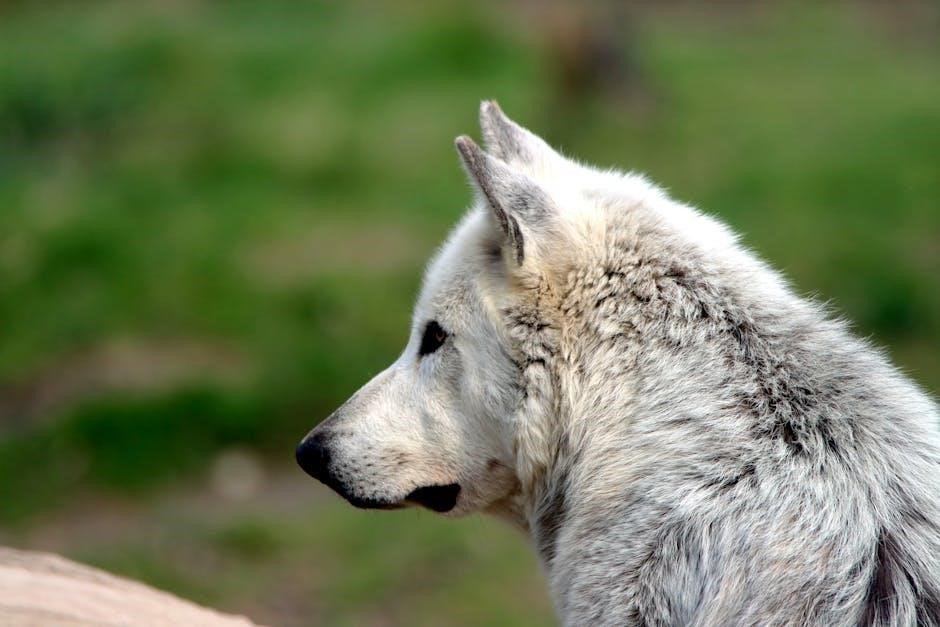
The “Wild Woman” archetype, central to Estés’s work, represents the untamed, instinctual, and creative aspects of the feminine psyche. She embodies a deep connection to nature, intuition, and a fierce independence. This isn’t about literal wildness, but a reclaiming of inherent power often lost through societal conditioning. Accessing the book, even through a “PDF”, unlocks understanding of this vital force.
Estés argues that modern society often stifles this archetype, leading to feelings of emptiness and disconnection. The Wild Woman isn’t “good” or “bad,” but a necessary component of a whole, healthy woman. Exploring this archetype, facilitated by resources like a readily available PDF, encourages self-discovery and authentic living.
Understanding the Archetype
Delving into Estés’s concepts, often accessed via a “PDF” version, reveals the Wild Woman’s profound influence on the female psyche and journey.
Defining the Wild Woman
The “Wild Woman” archetype, central to Estés’s work – frequently encountered in “PDF” form – isn’t about being literally wild, but a deep, instinctual nature within women. She embodies creativity, passion, and a connection to the natural world, often suppressed by societal conditioning. This primal feminine force isn’t tamed; it’s a resilient, resourceful energy.
Estés describes her as possessing qualities like intuition, fierce independence, and a cyclical understanding of life. Accessing this archetype, often through exploring the book’s stories (available as a “PDF”), allows women to reclaim lost aspects of themselves. It’s about recognizing and honoring the untamed spirit within, fostering authenticity and wholeness.
Historical and Mythological Roots
Estés meticulously draws upon centuries of myths, folktales, and stories – readily available for study within a “PDF” version of her work – to illustrate the “Wild Woman” archetype. These narratives, spanning cultures, reveal consistent themes of female strength, resilience, and connection to the natural world. From European fairy tales to indigenous stories, the archetype appears repeatedly.
Historically, women embodying these qualities were often revered as healers, shamans, or wise women. However, societal shifts led to suppression, demonization, or silencing of this powerful feminine energy. The book, often sought as a “PDF”, aims to resurrect these forgotten roots, reminding us of the enduring power of the Wild Woman within the collective unconscious.
The Loss of the Wild Woman in Modern Society
Estés argues that modern society, with its emphasis on rationality and control, has systematically diminished the “Wild Woman” within many women – a concept thoroughly explored in the widely circulated “PDF” edition. This loss manifests as a disconnection from intuition, creativity, and authentic self-expression. Societal pressures, patriarchal structures, and the suppression of natural cycles contribute to this fragmentation.
The readily available “PDF” version of the book details how women are often conditioned to prioritize external validation over inner knowing, leading to feelings of emptiness and disempowerment. Reclaiming the Wild Woman, therefore, becomes an act of resistance and self-recovery, a journey back to wholeness.

Key Themes Explored in the Book
The book, often found as a convenient “PDF”, delves into cycles, instincts, and creativity—essential elements for women’s psychological and spiritual well-being.
Cycles and Rhythms: Menstruation, Menopause, and Life Stages
Estés intricately connects the “Wild Woman” archetype to the natural rhythms of a woman’s life, emphasizing menstruation, menopause, and various life stages as powerful, not diminished, phases. She reframes these experiences—often pathologized by society—as integral to a woman’s creative and instinctual power.
The book, frequently accessed as a “PDF” for study, highlights how ignoring or suppressing these natural cycles leads to a disconnection from the core self. Estés draws upon myths and stories to illustrate how women historically honored these transitions, viewing them as opportunities for renewal and wisdom. Understanding these rhythms, she argues, is crucial for reclaiming the authentic self and living a fully embodied life.
Instinct and Intuition
A central tenet of “Woman Who Runs With The Wolves”, often explored through readily available “PDF” versions, is the reclaiming of female instinct and intuition. Estés posits that these innate knowing systems have been systematically silenced and devalued in modern society, leading to a sense of disorientation and powerlessness.
She argues that accessing these inner resources—often dismissed as “feminine intuition”—is vital for navigating life authentically and making choices aligned with one’s true self. Through analysis of folktales and myths, Estés demonstrates how women historically relied on their instincts for survival and guidance, and how reconnecting with this wisdom is essential for wholeness.
Creativity and Expression
Estés, within the widely circulated “Woman Who Runs With The Wolves” – frequently found as a “PDF” download – links creativity directly to the Wild Woman archetype and the untamed life force within. Suppressed creative expression, she contends, is a symptom of a disconnected psyche, hindering a woman’s ability to fully embody her potential.
The book encourages women to actively cultivate their creative impulses, whether through traditional arts, storytelling, or simply living life with authenticity and passion. Reclaiming this expressive power is presented not as a luxury, but as a fundamental need for psychological and spiritual well-being, fostering a vibrant inner life.

Analyzing the Stories and Myths
Estés masterfully dissects folklore, readily available in “PDF” versions, revealing archetypal patterns that illuminate the female psyche and journey toward wholeness.
Red Riding Hood: A Journey of Initiation
Estés reframes the tale of Red Riding Hood, often found within accessible “PDF” copies of the book, not as a cautionary tale of naiveté, but as a potent allegory for a young woman’s passage into adulthood. The forest symbolizes the unconscious, and the journey represents the inevitable confrontation with the wild, instinctual self.
The grandmother embodies the wise, aged woman, and the wolf represents the dangerous, untamed aspects of the psyche. Red Riding Hood’s willingness to enter the wolf’s domain, though frightening, signifies a necessary descent into the shadow self for growth. Successfully navigating this encounter, even with assistance, demonstrates a reclaiming of power and a crucial step toward individuation, a theme richly explored in the book’s readily available digital format.
Vasilisa the Beautiful: Facing the Dark Mother
Estés analyzes the Russian folktale of Vasilisa, frequently detailed in downloadable “PDF” versions of “Woman Who Runs With The Wolves,” as a powerful representation of a young woman confronting a destructive maternal figure – the “Dark Mother.” This archetype embodies the aspects of the feminine that are envious, consuming, and ultimately, life-threatening to the daughter’s blossoming psyche.
Vasilisa’s journey to Baba Yaga’s hut isn’t a quest for help, but a necessary descent into the underworld to retrieve the life-giving fire. The fire symbolizes inner wisdom and strength. Successfully completing the tasks set by Baba Yaga, and returning with the fire, signifies Vasilisa’s triumph over the destructive forces within herself and her mother, a core theme within the book’s accessible format.
Bluebeard: Confronting the Shadow Self
The tale of Bluebeard, often explored within the pages of “Woman Who Runs With The Wolves” – readily available as a “PDF” – serves as a potent metaphor for a woman’s confrontation with the dangerous aspects of the masculine, and, crucially, her own shadow self. Bluebeard’s forbidden room represents the unexplored, repressed parts of the psyche, holding both terror and immense power.
The young wife’s curiosity and eventual discovery of the previous wives’ remains symbolize the necessary, though frightening, process of acknowledging and integrating these disowned aspects. Estés emphasizes that avoiding the room – or denying the shadow – leads to a diminished life, while facing it, though perilous, unlocks authentic selfhood, a central tenet detailed in the book’s widely circulated form.
Practical Applications & Exercises
Integrating the wisdom of “Woman Who Runs With The Wolves,” often accessed as a “PDF”, involves dreamwork, journaling, and actively reclaiming personal boundaries.

Dreamwork and Interpretation
Estés emphasizes dreamwork as a crucial pathway to accessing the Wild Woman archetype, often explored through readily available “PDF” versions of the text. She posits that dreams are the “royal road” to the unconscious, offering direct communication from the instinctual self.
The book guides readers on how to record, analyze, and interpret their dreams, looking for recurring symbols, characters, and emotional tones. Particular attention should be paid to animal imagery, as animals frequently represent instinctual forces. Estés provides frameworks for understanding dream narratives not as literal predictions, but as symbolic representations of inner landscapes and unresolved conflicts.
Working with dreams, as detailed in the “PDF”, allows for a deeper understanding of personal myths and the reclaiming of lost aspects of the psyche, fostering wholeness and authentic expression.
Journaling for Self-Discovery
Complementary to dreamwork, journaling is presented by Clarissa Pinkola Estés – often accessed through a “PDF” copy of her work – as a powerful tool for self-exploration and reconnecting with the Wild Woman within. The practice encourages regular, free-flowing writing, without censorship or judgment.
Estés suggests prompts centered around personal experiences, emotions, and intuitive insights. Focusing on sensations, memories, and recurring patterns can reveal hidden narratives and unconscious beliefs. Journaling becomes a space to articulate the often-unspoken longings and frustrations that disconnect us from our authentic selves.
Through consistent journaling, as guided in the “PDF”, individuals can track their progress in reclaiming their voice and boundaries, fostering self-awareness and emotional resilience.
Reclaiming Your Voice and Boundaries
Estés, detailed within the widely circulated “PDF” version of “Woman Who Runs With The Wolves”, emphasizes that silencing the Wild Woman leads to a loss of authentic expression and weakened boundaries. Reclaiming your voice involves acknowledging and articulating your needs, desires, and truths, even when facing opposition.
Establishing healthy boundaries is crucial for protecting your energy and maintaining a sense of self. This means learning to say “no” without guilt, asserting your limits, and refusing to compromise your values. The book, often found as a “PDF”, provides archetypal stories illustrating the consequences of boundary violations.

Through self-awareness and courageous action, women can rediscover their inherent power and live more authentically.
The “PDF” Aspect & Accessibility
“Woman Who Runs With The Wolves” is frequently sought as a “PDF” for convenient access, enabling wider study and personal growth opportunities.
Finding Legitimate PDF Versions Online
Locating a lawful PDF version of “Woman Who Runs With The Wolves” requires careful navigation. Official sources, such as the publisher’s website or authorized digital retailers, are the safest options to ensure authenticity and support the author’s work. Many libraries offer digital lending programs, providing access to the book in PDF format with a library card.
Beware of websites offering free downloads, as these often contain malware, viruses, or pirated content. Utilizing reputable online bookstores and academic databases significantly reduces the risk of encountering illegitimate files. Always verify the source’s credibility before downloading any PDF to protect your device and respect copyright laws. Prioritize legal avenues for accessing this impactful text.
Potential Risks of Downloading from Unofficial Sources
Downloading a “Woman Who Runs With The Wolves” PDF from unverified websites carries substantial risks. These files frequently harbor malware, viruses, and spyware, potentially compromising your device and personal data. Pirated copies often lack proper formatting, contain errors, or are incomplete, diminishing the reading experience.
Furthermore, accessing copyrighted material illegally is a violation of the law, carrying potential legal consequences. Unofficial sources rarely offer customer support or guarantees of file integrity. Prioritizing legitimate sources—publishers, authorized retailers, or library lending programs—safeguards your digital security and supports the author’s intellectual property rights. Avoid the temptation of free, dubious downloads.
Ethical Considerations Regarding Copyright
Seeking a “Woman Who Runs With The Wolves” PDF necessitates acknowledging copyright laws. Clarissa Pinkola Estés and her publishers hold exclusive rights to the book’s distribution and reproduction. Downloading or sharing unauthorized copies constitutes copyright infringement, undermining the author’s livelihood and creative process.
Supporting authors through legitimate purchases—physical books or authorized digital versions—ensures continued literary contributions. Respecting intellectual property fosters a sustainable ecosystem for writers and publishers. Choosing ethical access methods demonstrates appreciation for the work and upholds legal standards. Consider library access or purchasing a legal PDF copy instead of seeking illicit downloads.

Criticisms and Controversies
“Woman Who Runs With The Wolves” faces scrutiny regarding its archetypal claims and potential for cultural misinterpretations, especially with widely circulated PDF versions.
Feminist Perspectives on the Archetype
Feminist interpretations of Estés’s “Wild Woman” archetype are complex, ranging from empowering reclamation of feminine strength to concerns about essentializing womanhood. Some celebrate the book’s encouragement of intuition and instinct, viewing it as a vital counter-narrative to patriarchal constraints, particularly accessible through readily available PDF copies.
However, critics argue that the archetype risks reinforcing binary oppositions – “wild” versus “civilized” – potentially limiting the spectrum of female experience. The emphasis on a primal, instinctual nature, while appealing to some, can be seen as neglecting the impact of social conditioning and diverse cultural contexts. The proliferation of unofficial PDFs raises questions about the author’s intended nuance being lost in fragmented circulation.
Ultimately, feminist engagement with the “Wild Woman” necessitates a critical lens, acknowledging both its potential for liberation and its inherent limitations.
Cultural Appropriation Concerns
A significant critique of “Woman Who Runs With The Wolves” centers on accusations of cultural appropriation, specifically regarding Estés’s use of myths and folklore from diverse cultures – often accessed via widely shared PDF versions. Critics argue that the book selectively draws upon these narratives without sufficient acknowledgement of their original contexts or the communities from which they originate.
The reinterpretation of stories from Indigenous, Mexican, and other traditions through a Jungian framework, while intending to be universal, can inadvertently strip them of their cultural specificity and reinforce colonial power dynamics. The ease of distributing the text as a PDF amplifies this concern, potentially spreading interpretations divorced from respectful engagement with source cultures.
Addressing these concerns requires acknowledging the ethical responsibility of engaging with and interpreting stories from cultures other than one’s own.
Psychological Validity of the Concepts
The psychological underpinnings of Estés’s “Wild Woman” archetype, frequently explored through readily available PDF copies, have faced scrutiny within the field of psychology. While rooted in Jungian psychology, critics question the empirical evidence supporting the existence of a universal female archetype manifesting in the ways described.
Some argue that the book relies heavily on anecdotal evidence and metaphorical interpretations of myths, lacking rigorous scientific validation. The widespread circulation of the PDF version doesn’t address these foundational concerns regarding the book’s scientific basis.
Despite this, many readers find the concepts psychologically resonant, offering a framework for self-discovery and healing, even if not empirically proven.

Impact and Legacy
“Woman Who Runs With The Wolves,” often shared as a PDF, profoundly impacted contemporary feminism and Jungian thought, fostering self-discovery globally.
Influence on Contemporary Feminism
Estés’s work, frequently circulated as a PDF, resonated deeply within feminist circles, offering a powerful counter-narrative to patriarchal structures. It provided a psychological framework for understanding female strength, intuition, and the reclaiming of suppressed aspects of the feminine psyche. The book challenged conventional notions of womanhood, advocating for embracing instinctual wisdom and rejecting societal expectations that stifle authentic self-expression.
“Woman Who Runs With The Wolves” encouraged women to reconnect with their “Wild Woman” archetype, fostering a sense of empowerment and self-reliance. This resonated with second and third-wave feminist ideals, promoting self-discovery and challenging gender roles. The accessibility of the PDF version further amplified its reach, allowing wider dissemination of these empowering ideas and contributing to ongoing dialogues about female identity and liberation.
Popularity and Continued Relevance
Despite its publication in 1992, “Woman Who Runs With The Wolves” maintains remarkable popularity, largely fueled by word-of-mouth and the convenient availability of a PDF version online. Its enduring appeal stems from its timeless exploration of universal female experiences – cycles, intuition, and creative expression. The book continues to resonate with readers seeking deeper self-understanding and a connection to their inner wisdom.
The accessibility of the PDF format has undoubtedly contributed to its sustained relevance, allowing new generations to discover and engage with Estés’s insights. In a world still grappling with gender inequality, the book’s message of female empowerment remains profoundly impactful, offering a pathway towards wholeness and authentic living.
The Book’s Place in Jungian Psychology
Clarissa Pinkola Estés masterfully integrates Jungian psychology, particularly archetypal theory, into “Woman Who Runs With The Wolves.” While not a strictly academic text, the book’s exploration of the Wild Woman archetype draws heavily from Jung’s concepts of the collective unconscious and the power of myth. The widespread availability of a PDF version has broadened access to these ideas.
However, it’s important to note that Estés presents a uniquely feminine interpretation of Jungian principles, often diverging from traditional analyses. The book serves as a popular introduction to Jungian thought, sparking interest in depth psychology, even if its approach isn’t always strictly aligned with academic rigor. The PDF facilitates this wider engagement.