

Article Plan: America the Beautiful Sheet Music PDF
This article explores accessing “America the Beautiful” sheet music in various formats, including free and paid options,
for diverse instruments and skill levels,
highlighting resources like MusicEdMagic and Musicnotes.com.
It details notation basics, key signatures, chord progressions, and offers learning tips,
addressing copyright, educational use, performance,
and the song’s enduring cultural impact.
“America the Beautiful” resonates deeply within the American spirit, serving as a powerful expression of national pride and scenic grandeur.
Its lyrical imagery, penned by Katharine Lee Bates, evokes breathtaking landscapes – spacious skies, amber waves of grain, and majestic mountains – fostering a sense of patriotic devotion.
The song’s enduring appeal stems from its ability to capture the essence of the American experience,
celebrating both the natural beauty of the land and the ideals of freedom and brotherhood.
The accessibility of sheet music plays a crucial role in preserving and sharing this beloved anthem.
Whether for personal enjoyment, educational purposes, or public performance,
the availability of “America the Beautiful” sheet music allows musicians of all levels to connect with its timeless message.
Numerous online resources now offer free and paid sheet music options,
catering to diverse instruments and skill sets, ensuring the song’s continued vibrancy for generations to come.

Historical Context of the Song
The origins of “America the Beautiful” trace back to 1893, when Katharine Lee Bates, a professor of English literature,
visited Pikes Peak in Colorado. Inspired by the panoramic vista, she penned a poem initially titled “America,”
published in The Congregationalist in 1895. This poem wasn’t immediately set to music; it circulated for years before Samuel A. Ward composed the melody, “O Mater Dei,” in 1910.
Interestingly, the song wasn’t instantly embraced as a national anthem.
“My Country, ‘Tis of Thee” and “The Star-Spangled Banner” held that position for decades.
However, “America the Beautiful” gradually gained popularity, particularly through its use in patriotic events and educational settings.
The increasing availability of sheet music, especially with the advent of online resources,
fueled its spread and cemented its place as a cherished American hymn, readily accessible for performance and study.
Katharine Lee Bates: The Poet Behind the Lyrics
Katharine Lee Bates (1859-1929) was a prominent American poet and academic,
renowned for her lyrical and patriotic verse. A graduate of Wellesley College, she dedicated her life to education,
teaching English literature at the institution for over four decades. Her travels across the United States profoundly influenced her writing,
particularly her observations of the diverse American landscape.
The inspiration for “America the Beautiful” stemmed from a transformative trip to Pikes Peak in 1893.
The breathtaking views ignited her poetic imagination, resulting in the initial poem, “America.”
Bates’s work often explored themes of national identity, beauty, and spiritual reflection.
The enduring appeal of her lyrics lies in their evocative imagery and heartfelt expression of American ideals,
making the poem, and subsequently the song, a staple in American culture and readily available in sheet music form.
Samuel A. Ward: The Composer of the Melody
Samuel A. Ward (1847-1903) was an American composer and organist, primarily known for setting Katharine Lee Bates’s poem, “America,” to music.
He served as the organist at Trinity Church in Newark, New Jersey, for over three decades, significantly contributing to the church’s musical landscape.
Ward’s compositional style was rooted in traditional hymnody, reflecting his deep religious faith and musical training.
Initially, Ward titled his melody “Materna,” intending it for a different poem altogether.
However, in 1910, the pairing with Bates’s lyrics, now known as “America the Beautiful,” gained widespread recognition.
The majestic and uplifting quality of Ward’s composition perfectly complemented the poem’s patriotic and inspirational themes.
This harmonious blend cemented the song’s place in American hearts and ensured its continued availability in countless sheet music arrangements.

The Original Publication and Title (“America”)
Katharine Lee Bates’s poem, initially titled simply “America,” first appeared in print on July 4th, 1895, within the pages of The Congregationalist, a church periodical.
This initial publication lacked the now-iconic melody composed by Samuel A. Ward; it stood as a poem alone, already resonating with patriotic sentiment.
The poem’s evocative imagery of the American landscape and its call for national unity quickly captured the public’s imagination.
It wasn’t until 1910 that the pairing with Ward’s “Materna” melody truly launched the song into national prominence, leading to its eventual renaming as “America the Beautiful.”
Early sheet music publications reflected this original title, “America,” and often featured slightly different arrangements than those commonly found today.
Accessing these early editions provides a fascinating glimpse into the song’s evolution and initial reception.
Early Popularity and Adoption as a Patriotic Song
Following the 1910 combination of Bates’s lyrics and Ward’s melody, “America the Beautiful” rapidly gained traction, becoming a beloved patriotic hymn.
Its widespread appeal stemmed from its stirring verses celebrating the nation’s landscapes and ideals, offering a hopeful vision of unity and grace.
Sheet music sales soared as Americans embraced the song for patriotic gatherings, school events, and personal enjoyment.
Though never officially designated as the national anthem (that honor belongs to “The Star-Spangled Banner”), “America the Beautiful” consistently ranks among the most cherished patriotic songs in the United States.
Its accessibility, through readily available sheet music, fostered a culture of performance and communal singing, solidifying its place in American hearts and minds.
The song’s enduring popularity continues to drive demand for sheet music today.
Finding “America the Beautiful” Sheet Music Online
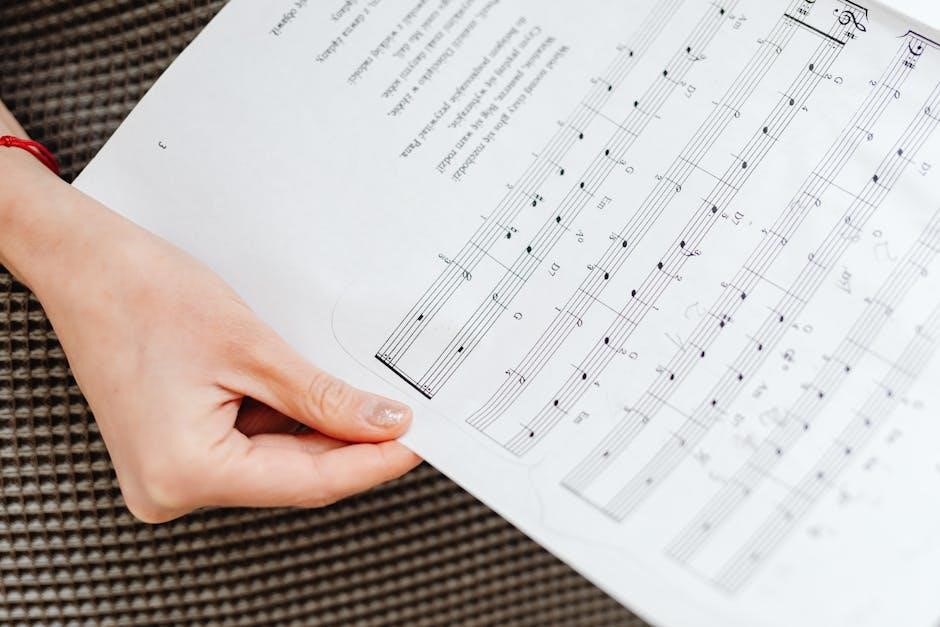
The internet provides a wealth of resources for locating “America the Beautiful” sheet music in PDF format. A simple online search reveals numerous websites offering free and paid arrangements. Musicians can readily access versions tailored to their instrument of choice, from piano and guitar to flute and violin.
Websites specializing in sheet music, like MusicEdMagic.com, are excellent starting points for free, downloadable PDFs.
Beyond dedicated sheet music sites, general music platforms and online retailers also host arrangements.
However, verifying the legality and quality of free downloads is crucial.
Paid resources often offer higher-quality transcriptions and a wider selection of arrangements, ensuring a reliable and accurate musical experience for performers of all levels.
MusicEdMagic.com: A Primary Source for Free Sheet Music
MusicEdMagic.com stands out as a premier online destination for educators and musicians seeking free sheet music, including multiple arrangements of “America the Beautiful.” The site offers downloadable PDFs suitable for various instruments and ensembles, fostering accessibility for classroom use and personal practice. Notably, MusicEdMagic requests a simple acknowledgement – a link on school websites or in concert programs – from educational institutions utilizing their resources.
The platform’s extensive library encompasses diverse arrangements, catering to different skill levels and instrumentation needs. Users can easily browse and download sheet music without registration or subscription fees. This commitment to free access makes MusicEdMagic an invaluable resource for music educators and enthusiasts alike, promoting musical engagement and appreciation.
Other Websites Offering Free PDF Sheet Music
Beyond MusicEdMagic, several other online platforms provide free PDF sheet music for “America the Beautiful.” While the availability and arrangement quality may vary, these sites offer additional options for musicians seeking accessible resources. Many websites host user-submitted arrangements, contributing to a diverse collection of interpretations. However, users should exercise caution and verify the accuracy of the sheet music before use, as quality control can differ significantly.
Exploring these alternative sources can uncover unique arrangements or instrumentations not found elsewhere. Common search terms like “free America the Beautiful sheet music PDF” will yield numerous results, though careful evaluation is crucial. Remember to respect copyright guidelines and acknowledge the source when utilizing freely available materials.
Paid Sheet Music Resources: Musicnotes.com & Similar Platforms
For musicians seeking high-quality, professionally arranged sheet music, platforms like Musicnotes.com offer a comprehensive selection of “America the Beautiful” arrangements. These resources typically provide officially licensed scores, ensuring accuracy and adherence to copyright regulations. Musicnotes.com and similar sites (Sheet Music Plus, for example) boast a vast library spanning various instruments, skill levels, and arrangement styles – piano, guitar, vocal, and orchestral.

Purchasing sheet music from these platforms often grants access to additional features, such as printable PDFs, adjustable tempos, and interactive playback options. While requiring a financial investment, the benefits of professionally prepared scores – clarity, accuracy, and arrangement quality – often justify the cost for serious musicians and educators. These platforms also frequently offer previews, allowing users to assess the arrangement before purchasing.
Digital Sheet Music Formats: PDF, MP3, MIDI, Guitar Pro
“America the Beautiful” sheet music is readily available in several digital formats, catering to diverse musical needs and preferences. PDF (Portable Document Format) remains the most common, offering a universally accessible, printable score. MP3 files provide audio recordings of the song, useful for learning the melody and phrasing. MIDI (Musical Instrument Digital Interface) files allow musicians to import the music into digital audio workstations for manipulation and customization.
Guitar Pro files are specifically designed for guitarists, displaying tablature alongside standard notation, facilitating learning chords and riffs. These formats offer flexibility; PDFs for printing and practice, MP3s for ear training, and MIDI/Guitar Pro for advanced arrangement and performance. The availability of these diverse formats ensures accessibility for musicians of all levels and instruments.
Sheet Music Arrangements for Different Instruments
“America the Beautiful” lends itself beautifully to arrangements for a wide array of instruments, expanding its accessibility and appeal. Piano sheet music is exceptionally popular, ranging from beginner-friendly simplified versions to complex, advanced arrangements. Guitar arrangements cater to both acoustic and electric players, with options for solo performance or accompaniment.
Vocal sheet music is available for soloists and choirs, often including harmonies and accompaniment parts. Beyond these, arrangements exist for flute, violin, and other orchestral instruments, allowing diverse ensembles to perform this patriotic piece. Finding arrangements tailored to your instrument is straightforward, with numerous online resources offering downloadable sheet music in various formats. This versatility ensures “America the Beautiful” can be enjoyed by musicians of all backgrounds.
Piano Sheet Music: Beginner, Intermediate, and Advanced Levels
Piano sheet music for “America the Beautiful” is widely available, catering to all skill levels. Beginner arrangements simplify the melody and harmonies, often using single-note accompaniment and basic chords, ideal for those new to the instrument. Intermediate versions introduce more complex chord progressions, fuller harmonies, and slightly more challenging rhythms, building upon foundational skills.
Advanced arrangements present the most demanding challenge, featuring intricate ornamentation, sophisticated harmonies, and potentially octave runs or arpeggios. These arrangements require a strong technical foundation and musical understanding. Resources like Musicnotes.com and free sheet music sites offer options across these levels, allowing pianists to select music appropriate for their abilities and enjoy performing this beloved patriotic song.
Guitar Sheet Music: Acoustic and Electric Guitar Arrangements
Guitarists can find “America the Beautiful” sheet music tailored for both acoustic and electric guitars. Acoustic arrangements frequently utilize fingerpicking patterns or strumming chords, emphasizing the song’s melodic beauty and harmonic richness. These versions often include chord diagrams for easy reference, making them accessible to players of varying skill levels.
Electric guitar arrangements may incorporate techniques like bends, slides, and vibrato to add expressiveness and a unique sonic texture. Tablature (TAB) is commonly used alongside standard notation, simplifying the learning process for guitarists unfamiliar with reading music. Numerous websites offer free and paid guitar sheet music, providing options for solo performance or accompaniment, allowing guitarists to contribute their own interpretation to this classic piece.
Vocal Sheet Music: Solo and Choir Arrangements
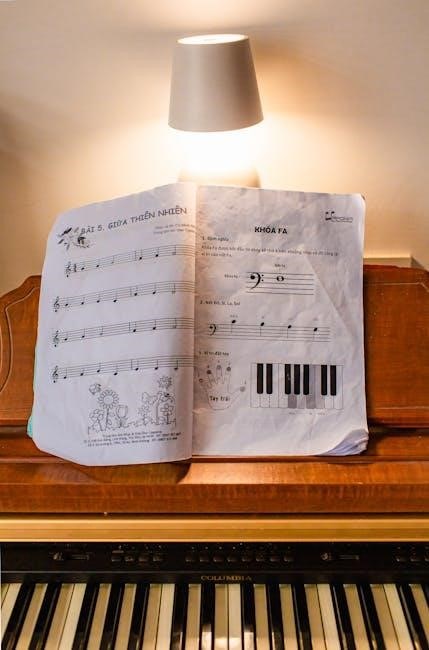
“America the Beautiful” vocal sheet music is widely available for both soloists and choirs, catering to diverse vocal ranges and ensemble sizes. Solo arrangements typically include the melody line, lyrics, and piano accompaniment, suitable for individual performances or vocal practice. These often feature simplified harmonies for ease of singing.
Choir arrangements are more complex, offering SATB (Soprano, Alto, Tenor, Bass) harmonies and potentially including divisi parts for richer vocal textures. These arrangements are ideal for church choirs, school ensembles, or community groups. Many online resources provide downloadable sheet music in PDF format, with options for different vocal arrangements and accompaniment styles, allowing for varied interpretations of this beloved patriotic hymn.
Flute, Violin, and Other Instrument Arrangements
Beyond piano and guitar, “America the Beautiful” sheet music is readily adapted for a wide array of instruments, enriching its accessibility and performance possibilities. Flute arrangements often transpose the melody to suit the instrument’s range, offering lyrical interpretations. Violin arrangements can range from simple beginner versions to more complex arrangements featuring double stops and vibrato.
Other instruments like cello, clarinet, and even trumpet have dedicated sheet music available, often found on platforms specializing in instrumental arrangements. These arrangements frequently include piano accompaniment for ensemble playing. Digital sheet music websites boast extensive catalogs, providing options for various skill levels and instrumentation, allowing musicians to enjoy and share this iconic song in unique and personalized ways.
Understanding Sheet Music Notation Basics
Decoding sheet music is fundamental to playing “America the Beautiful,” regardless of instrument. The staff comprises five lines and four spaces, representing different pitches. Clef symbols—typically treble or bass—define these pitches. Notes indicate pitch and duration, with varied shapes representing whole, half, quarter, and eighth notes.
Rests denote silence, mirroring note durations. Time signatures (like 3/4) dictate the beat per measure. Understanding these elements unlocks the musical language. “America the Beautiful” sheet music utilizes standard notation, making it accessible to those familiar with basic music theory. Familiarizing yourself with these concepts will greatly enhance your ability to learn and perform this beloved patriotic song.
Key Signatures and Time Signatures in “America the Beautiful”
Analyzing “America the Beautiful” sheet music reveals its key signature and time signature, crucial for accurate performance. Commonly, arrangements appear in the key of F major, indicated by one flat (Bb) in the key signature. This impacts the notes played throughout the piece.
The time signature is predominantly 3/4, meaning three beats per measure, often creating a waltz-like feel. However, variations exist in different arrangements. Recognizing these signatures is vital for maintaining the correct rhythm and harmonic structure. Sheet music PDF versions clearly display these elements at the beginning of the score, guiding musicians through the song’s musical framework and ensuring a faithful rendition.

Chord Progressions and Harmonic Analysis
“America the Beautiful” utilizes a relatively straightforward, yet emotionally resonant, harmonic structure. A common chord progression centers around I-IV-V-I in F major – F major, Bb major, C major, and back to F major. This foundational progression provides a sense of stability and patriotism.
Harmonic analysis of sheet music PDF versions reveals occasional use of secondary dominants and passing chords to add color and depth. These enrich the harmonic texture without overly complicating the song. Understanding these chord changes allows musicians to interpret the piece with greater nuance and expressiveness. Accessing sheet music facilitates a deeper dive into the song’s harmonic language, enhancing both performance and appreciation.
Tips for Learning to Play “America the Beautiful”
Beginners should start with simplified piano sheet music PDF arrangements, focusing on the melody and basic chords. Slow practice is crucial, gradually increasing tempo as proficiency grows. Guitarists can utilize acoustic arrangements and practice chord transitions smoothly. Vocalists should focus on phrasing and breath control, referencing sheet music for melodic accuracy.
Utilize online resources alongside sheet music PDFs – tutorials and play-along tracks can aid learning. Break down challenging sections into smaller parts, mastering each before combining them. Pay attention to dynamics and articulation indicated on the sheet music to convey emotion. Consistent practice and a patient approach are key to successfully learning this beloved patriotic song.

Copyright and Usage Rights for Sheet Music
“America the Beautiful” itself is in the public domain, meaning the lyrics and original melody are free to use. However, specific sheet music arrangements – particularly modern ones or those with unique instrumentation – may be protected by copyright. Free PDF sheet music from sites like MusicEdMagic often operates under permissions or requests attribution.
When using free resources, respecting any stated usage guidelines is essential, such as linking back to the source. Paid sheet music from platforms like Musicnotes.com comes with a license granting usage rights for personal practice and performance. Commercial use, such as selling arrangements or including them in paid performances, generally requires additional licensing or permission from the copyright holder.
“America the Beautiful” in Educational Settings

“America the Beautiful” is a staple in many school music programs, offering a patriotic and musically accessible piece for students. The availability of free sheet music, particularly from resources like MusicEdMagic.com, makes it incredibly valuable for educators with limited budgets. Teachers can utilize various arrangements – piano, vocal, instrumental – to cater to different skill levels and ensemble types.
The song’s simple harmonic structure provides a good foundation for teaching music theory concepts like key signatures and chord progressions. Incorporating historical context about Katharine Lee Bates and Samuel A. Ward enriches the learning experience. Encouraging students to analyze the lyrics fosters civic engagement and appreciation for American ideals.
Using Sheet Music in Classroom Music Programs
Integrating “America the Beautiful” sheet music into classroom activities is remarkably versatile. Educators can employ it for sight-reading practice, vocal exercises, and instrumental ensemble work. The availability of arrangements for piano, guitar, flute, and choir allows for diverse musical explorations. Utilizing free PDF sheet music from sites like MusicEdMagic.com reduces costs and facilitates wider access.
Teachers can guide students through harmonic analysis, identifying key signatures and chord progressions within the song. Performance projects, such as school concerts or patriotic assemblies, provide opportunities for students to showcase their skills. Encouraging students to create their own arrangements fosters creativity and deeper musical understanding. Remember to credit composers and respect copyright guidelines.
Performance Considerations and Interpretations
Performing “America the Beautiful” demands sensitivity and respect for its patriotic significance. Musicians should consider tempo, dynamics, and phrasing to convey the song’s emotional depth. Sheet music arrangements – whether for solo piano, guitar, or choir – offer varied interpretive possibilities. Vocalists should focus on clear diction and expressive delivery of Bates’ powerful lyrics.
Instrumentalists can explore different tonal colors and textures to enhance the song’s beauty. Choirs can experiment with harmonies and vocal blending. Understanding the historical context – the poem’s origins and Ward’s composition – informs a more nuanced performance. Adapting arrangements to suit the ensemble’s skill level is crucial, ensuring a polished and moving rendition.
The Song’s Cultural Significance and Legacy
“America the Beautiful” transcends its musical form, becoming a powerful symbol of national pride and aspiration. Katharine Lee Bates’ lyrics evoke vivid imagery of the American landscape and ideals, resonating deeply with generations. The song’s enduring popularity stems from its hopeful message of unity and grace, often performed at patriotic events and ceremonies.
Accessibility to sheet music, both free and paid, has fostered widespread performance and appreciation. Its presence in educational settings – through resources like MusicEdMagic – ensures its continued transmission to future generations. The song’s legacy extends beyond music, influencing art, literature, and national identity. “America the Beautiful” remains a cherished expression of American values and a testament to the power of artistic collaboration.
Continuing to Share the Beauty of the Song
The readily available “America the Beautiful” sheet music, in formats like PDF, MP3, and MIDI, ensures the song’s continued life and accessibility. Platforms like MusicEdMagic and Musicnotes.com democratize music education, allowing individuals of all skill levels to engage with this patriotic hymn. The diverse arrangements – for piano, guitar, flute, and choir – cater to varied musical preferences and abilities.
By sharing and performing this timeless piece, we uphold its cultural significance and inspire a sense of national unity. The ease of access to sheet music encourages musical exploration and fosters appreciation for both Bates’ poetry and Ward’s melody. “America the Beautiful” remains a powerful reminder of the nation’s ideals, beautifully expressed through music.